
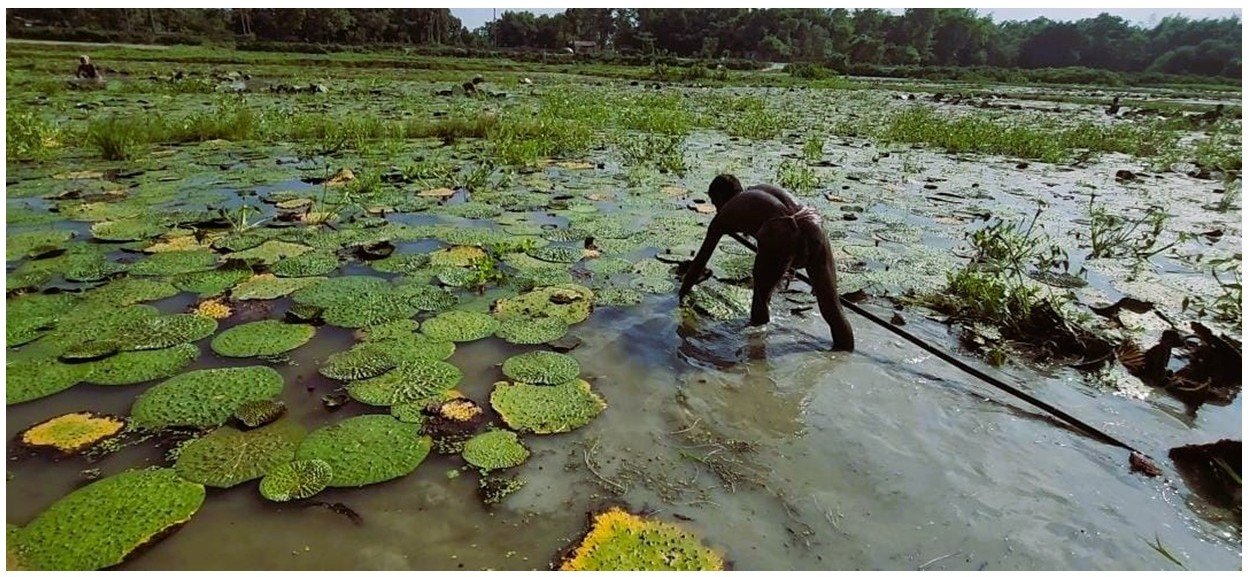
Behind a Superfood: A Journey into the Heart of Makhana Farming
When we hear the word superfood, we often think of nutrition values, glossy packaging, and health trends. But the real story lies far from supermarket shelves. It begins with the people, the land they are associated with, and their struggles that shape every seed. During my recent field visit to Purnea, Bihar, I discovered the unseen world of Makhana farming. This experience changed the way I look at food — not just as a product, but as a journey of dedication, resilience and tradition.
Stepping into the Fields
On a warm morning in the month of Jun 2025, I walked into the Makhana fields. From a distance, the plants looked like a soft green carpet floating on water. But as I got closer, I saw the reality — farming here is tough. Farmers stand barefoot in muddy, waist-deep water, carefully balancing themselves while handling the spiny plants.I thought for a moment, if they can do it, why can’t I? But the moment I stepped in, I realized how difficult it was. It takes years of practice and skill. For the farmers, this is not just work — it’s culture, tradition, and survival passed down through generations.

Meeting Summit: learning about the Roots.
In the middle of the fields, I met Summit, a farmer who has spent his entire life growing Makhana. He welcomed me warmly and began explaining each step of the process — from planting to harvesting to drying the seeds. The way he described it made everything sound so simple, almost effortless. But when I witnessed it myself, I realized how much strength and skill it actually required. What looked like routine for him was, in reality, hours of hard work hidden behind every stage.
As we spoke, one line from him stayed with me:“We learn this as you learn in school — only here, nature is our teacher.” His words reminded me that traditional Makhana farming is not mechanized. It is entirely manual, labor-intensive, and deeply tied to weather and water. For farmers like Summit and for the Malah communities of Bihar, it is more than just farming — it is survival. And behind every handful of seeds lies not only food but also the patience, skill, and dignity of the people who nurture it.
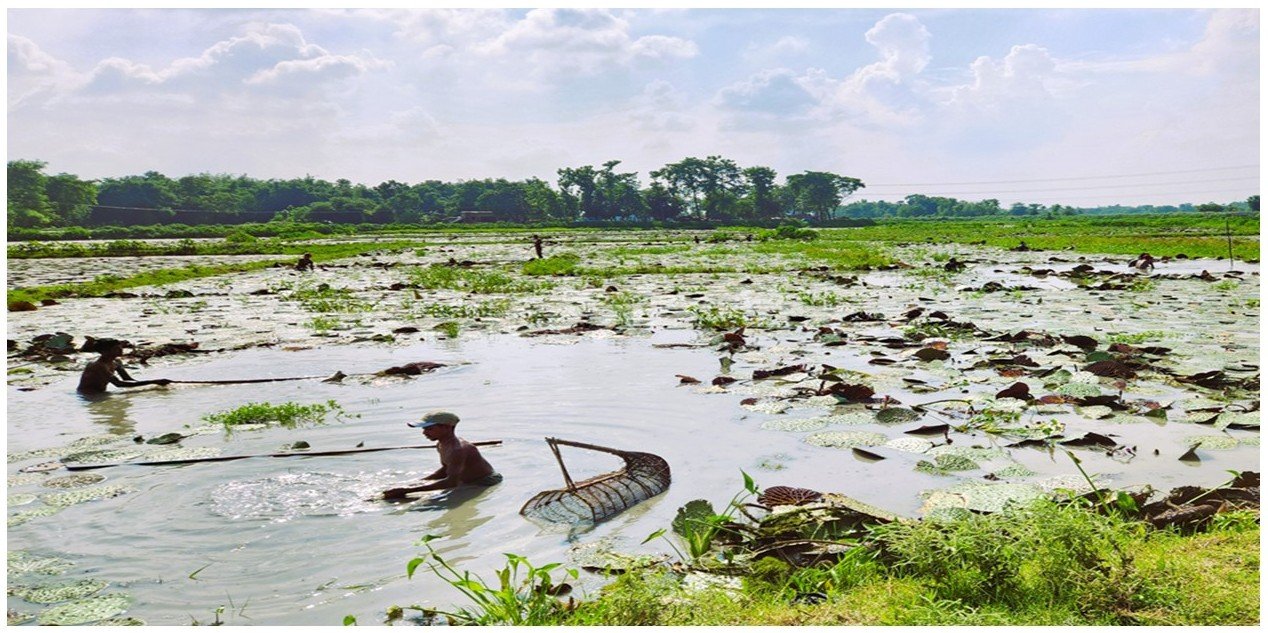
Extraction of seeds from deep into the water
Meeting with a Fisherman cum Farmer from Malah Community
Later, I met Jiwachh Malahdar, a farmer and fisherman from the Malah community, which has been connected to Makhana farming in ponds for centuries. He never had formal schooling, yet his knowledge of rivers, water cycles, and seasons was remarkable. Listening to him made me curious about how deeply traditional wisdom can guide sustainable living. At one point, he said: “We do not control nature. We work with it.” That single line stayed with me.It made me realize that what the world now calls sustainability has always been a way of life for communities like the Malah — For generations, this community have practiced sustainability without naming it so — farming in natural water cycles, protecting aquatic life,no use of mechanization, community sharing of resources and relying on traditional knowledge instead of chemicals. Their way of working with nature, not against it, ensures both survival and balance and sets a very good example for the young generation to learn.
More Than a Superfood
This visit strengthened our company’s vision — to make Makhana not just a product, but a promise:
- Ensuring fair wages for farmers and their families
- Practicing sustainable sourcing that works with nature
- Supporting the economic upliftment of farming communities
- And maintaining transparency, so you always know who is behind your food
When you choose our Makhana, you are not just choosing a healthy snack. You are supporting farmers like Summit and families like Jiwachh’s, helping preserve traditions, and contributing to sustainable livelihoods.
What You Can Do
- Pause and think about the hands that grow your food.
- Support ethical, fair-trade, and sustainable choices.
- Stay with us as we bring more stories directly from the fields.